Black Sea Tours & Experiences
Our Black Sea tours offer a different perspective on Turkey. Dense forests replace the dry landscapes associated with much of Anatolia. Mountain villages and highlands replace the familiar coastal resorts, while local architecture, food and traditions change as you travel from west to east.
Travel through old towns and villages, walk in deep forests, spend time in highland settlements and discover traces of the Greek, Roman, Byzantine and Ottoman worlds. Further east, the mountains become higher and the valleys more remote, leading towards the Kaçkar Mountains, Artvin and Macahel.
Some journeys concentrate on one part of the Black Sea, while others can connect several regions. We can shape the experience around walking, culture, history, nature or a combination of them.
From the Western Black Sea to the Eastern Mountains
The Turkish Black Sea stretches across a vast part of northern Anatolia. Western, Central and Eastern Black Sea landscapes each have their own character, and we do not approach them as one uniform destination.
In the west, forested mountains, traditional towns and rural landscapes create opportunities for walking and cultural journeys. Moving east, the geography becomes increasingly mountainous. Historic settlements, river valleys, highland communities and old routes reveal a region shaped by movement between the Anatolian interior and the Black Sea coast.
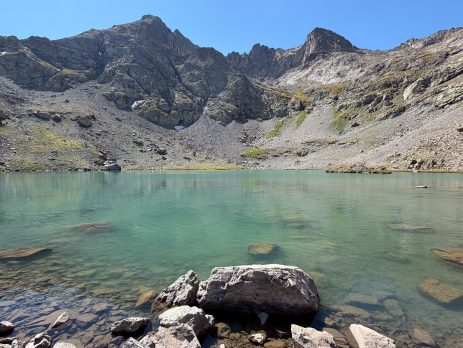
Further east, Trabzon, Gümüşhane, Rize and Artvin lead into a different mountain world. The Kaçkar Mountains, remote valleys and highland settlements make this one of Turkey’s most distinctive regions for travellers interested in nature and local life.
More Than Hiking – A Cultural Landscape
Walking helps us explore the Black Sea, but it is not the only reason to travel here. The landscape makes more sense when its villages, history and people become part of the journey.
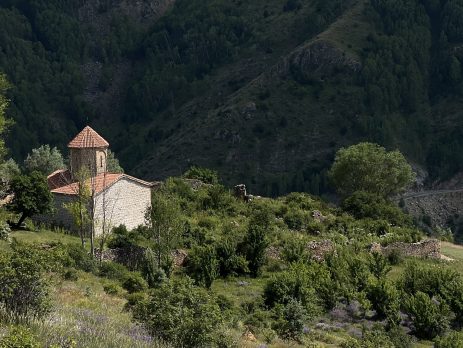
For centuries, mountains and valleys have been home to different communities. Former Greek settlements, churches, monasteries, stone houses, mining villages and old trade routes remain part of the cultural landscape. Places such as Santa and Krom offer opportunities to walk through the landscape while also exploring the history of the people who once lived there.
Rather than separating nature from history, our programmes bring them together. A forest trail may lead to an abandoned settlement, a mountain road to an old church, or a highland walk to a village where local traditions continue today.
Highland Life & Mountain Villages
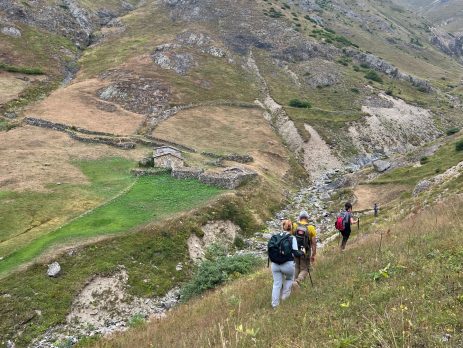
The highlands — the yaylas of the Black Sea — are an important part of the region’s identity. They are not simply scenic places in the mountains. Seasonal movement between villages and high pastures has shaped settlement patterns, food traditions and everyday life for generations.
Our journeys can include time in mountain villages and highland settlements rather than simply passing through them. Local guesthouses, village meals and conversations with people who live in the region can become as important as the walking itself.
This slower approach allows travellers to experience the Black Sea as a living cultural landscape rather than as a collection of viewpoints.
Forests, Valleys & the Mountains of the Black Sea
Forests are one of the defining features of the Black Sea. Depending on the region, routes can pass through wooded valleys, mountain forests, high pastures and increasingly alpine landscapes towards the east.
Walking programmes can range from shorter day walks with vehicle support to longer mountain routes. Not every traveller needs to be a serious trekker. We can adjust the amount of walking according to the landscape, season and experience of the group.
For experienced walkers, the Kaçkar Mountains can add a more substantial trekking element. For others, the forests, villages and valleys offer many opportunities to experience the landscape without committing to a long mountain expedition.
Old Greek Settlements, Monasteries & Layers of History
The Black Sea has a complex cultural history that extends far beyond the modern boundaries of towns and provinces. Greek-speaking communities, Armenians, Turks and other peoples contributed to the history of different parts of the region over centuries.
Former Greek settlements, churches and monasteries still survive in some mountain valleys. Sümela is the best-known example, but smaller settlements such as Santa and Krom allow us to explore this history away from the major visitor routes.
These places are especially meaningful when experienced within their geography. Mountains, passes, mines, rivers and routes between the coast and interior help explain why communities developed where they did.
Ancient Routes & the Footsteps of Xenophon
The mountains of the Black Sea also preserve the memory of much older journeys. Ancient routes crossed northern Anatolia long before modern roads connected its valleys and coastal towns.
Some of our programmes explore landscapes associated with Xenophon’s Anabasis and the journey of the Ten Thousand towards the Black Sea. Rather than presenting a single modern trail as an unquestionable reconstruction, we consider the historical sources, geography and possible routes together with local knowledge.
For travellers interested in history, this creates an opportunity to read the landscape as well as walk through it.
Kaçkar Mountains, Artvin & Macahel
In the Eastern Black Sea, the landscape becomes increasingly mountainous and remote. The Kaçkar Mountains offer high valleys, forests, pastures and mountain routes, while Artvin introduces another network of deeply cut valleys and rural settlements.
Macahel offers a particularly different experience. Forests, villages, waterfalls, traditional agriculture and local life make it possible to explore the region without measuring every day by kilometres walked.
These eastern landscapes can form a journey of their own or become the final part of a longer Black Sea programme travelling from west to east.
Food, Hospitality & Everyday Life
Regional food is another way to understand the Black Sea. What people grow, cook and eat reflects the climate, geography and agricultural traditions of individual valleys and communities.
Local meals, village kitchens, markets, tea culture and seasonal products can become part of the journey. We prefer to include these experiences naturally within the programme rather than treating local food as an isolated attraction.
For travellers with a particular interest in gastronomy, food and local production can also play a larger role in a tailor-made Black Sea itinerary.
A Region That Takes Time to Explore
Travelling through the Black Sea is not always as simple as moving between Turkey’s major tourism centres. Mountain geography, winding roads, weather conditions and the distances between valleys can make some journeys slower than they appear on a map.
We see this as part of the character of the region rather than something to hide. Reaching a remote village, crossing a mountain pass or travelling deep into a forested valley may take time. In return, these journeys can lead to places and experiences that are difficult to reproduce on a standard sightseeing itinerary.
For this reason, we prefer realistic programmes with enough time to experience each area rather than trying to cover too many places in a few days.
Private & Tailor-Made Black Sea Tours
You do not have to travel across the entire Black Sea region. Our Black Sea tours can concentrate on one area or connect several landscapes according to your available time and interests.
You might focus on forests and historic towns in the west, combine Trabzon and Gümüşhane with walking and cultural heritage, spend more time in the Kaçkar Mountains, or continue east towards Artvin and Macahel.
The balance between walking, history, culture, food and nature can also change from one journey to another. Tell us how much time you have, what interests you and how active you would like to be. We can shape the programme around the Black Sea you want to experience.
A Different Side of Turkey
The Black Sea offers a different perspective on Turkey. Dense forests replace the dry landscapes associated with much of Anatolia. Mountain villages and highlands replace the familiar coastal resorts, while local architecture, food and traditions change as you travel from west to east.
It may take more time to reach some of these places, but that is also why the experience can be so rewarding. The journey is not simply about arriving at a destination. The roads, valleys, villages, people and changing landscapes between them are part of the Black Sea experience.
Local Knowledge, Professional Organisation
The geography of the Black Sea makes good planning and local knowledge particularly important. Weather, seasonal conditions, mountain roads and access to remote areas can all affect the programme.
Professional licensed guides lead our guided programmes, and we work with local people and regional knowledge where they add value to the journey. Globe Outdoors Travel, a TÜRSAB-certified travel agency (Document No. A-17542), organises the travel arrangements.
Whether you are interested in hiking, history, village life, forests, highlands or a combination of them, we can help you build a Black Sea journey around your interests and available time.