
“Truly Anatolian” | An Archaeological Journey Through Time
“Anatolia Uncovered” – An Anatolian Journey Through Time
“Truly Anatolian”
Archaeology, Culture & Overland Travel | “Guided”
All-Inclusive Packages: Accommodation, All Meals, and Transfers


- Description
- More Info
- Guidelines and Notes
- Form
Description
This is not a standard Anatolian tour. It is a carefully designed, archaeologist-led expedition created for travellers who seek depth, access, and a meaningful connection with culture and history.
At the heart of this journey is its archaeological focus, and this is not a hiking tour. You are accompanied throughout by an expert archaeologist guide, who transforms each location into a living narrative. Ancient cities are not simply visited—they are interpreted, contextualised, and connected to the broader human story.
Whenever possible, visits are further enriched through direct encounters with excavation directors or site specialists, offering a level of insight rarely accessible to travellers. Hearing interpretations directly from those working on the sites brings an authenticity and depth that defines this experience.
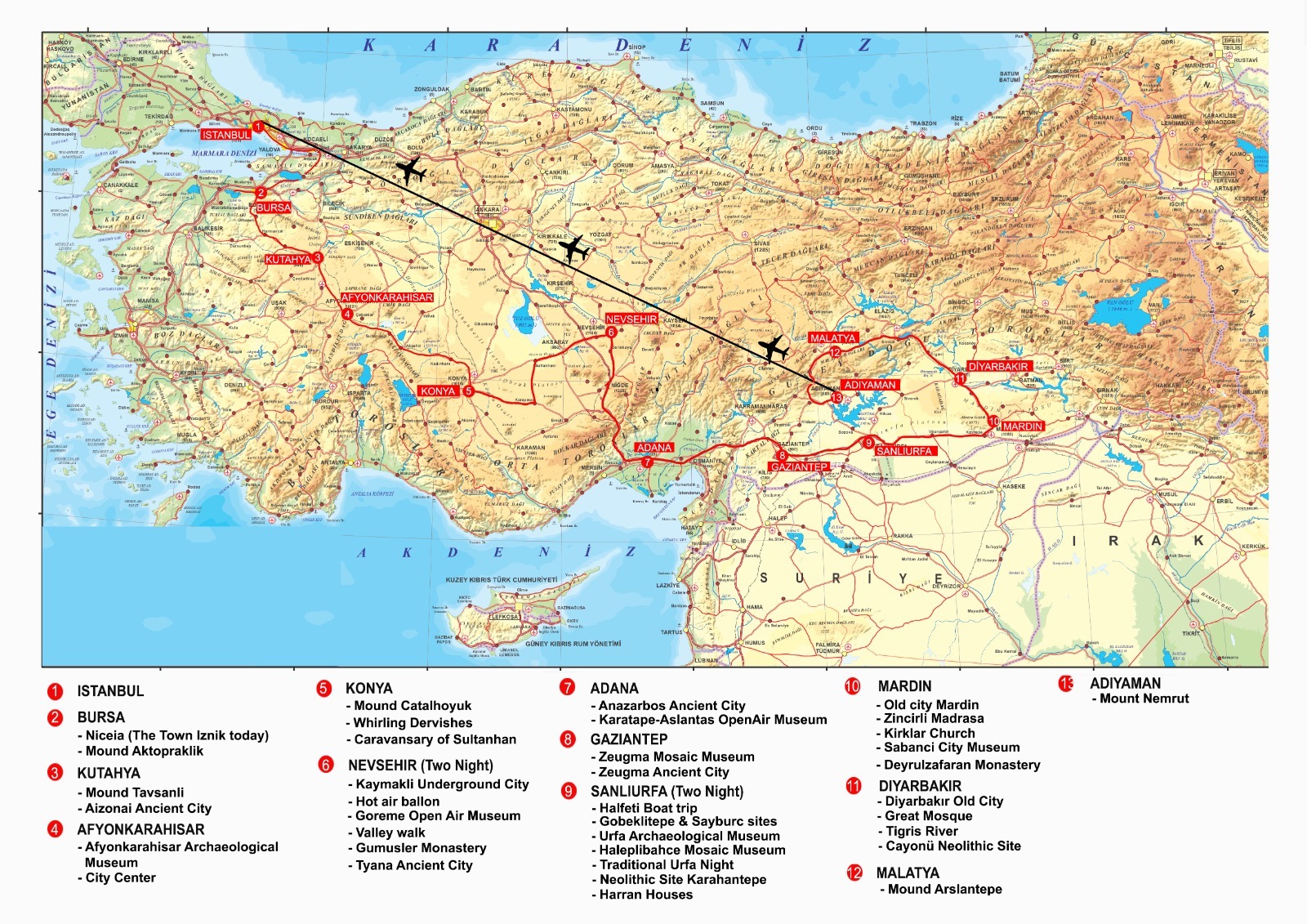
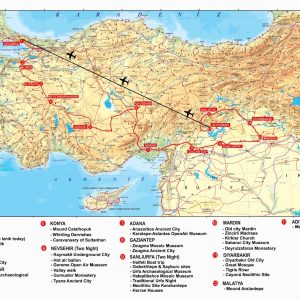
Beginning in Istanbul, where continents and civilisations meet, the journey unfolds across Anatolia—travelling overland in a private vehicle, allowing you to experience not only the destinations but also the transitions between them. Landscapes, cultures, and architectural layers evolve gradually, revealing a continuity that cannot be understood through flights alone.
Designed for individual travellers, couples, and small private groups, this program offers something increasingly rare: intimacy, flexibility, and intellectual depth. With limited group sizes, every site becomes more personal, every question part of the experience, and every moment more immersive.
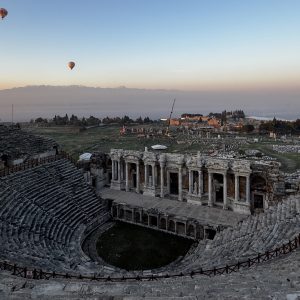
From the earliest known temple complex at Göbeklitepe to the proto-urban world of Çatalhöyük, from Roman cities like Aizanoi and Zeugma to the spiritual landscapes of Cappadocia and the cultural mosaic of Mardin—this is a journey across more than 12,000 years of human history.
Equally important is how you experience it.
Accommodation and dining are carefully curated throughout the program. Rather than standardised options, each hotel and restaurant is selected for its character, location, and connection to the region. Whether staying in a boutique property or enjoying a meal in a local setting, every detail is chosen to enhance the sense of place.
Meals are an integral part of the narrative—regional cuisine becomes a cultural layer, reflecting geography, tradition, and history. From Central Anatolian dishes to the rich flavours of the southeast, gastronomy is treated as an essential element of the journey.
This program is also designed with flexibility in mind. While the itinerary follows a carefully structured historical timeline, it can be tailored to your interests, pace, and time availability. The number of days can be shortened, specific regions emphasised, or certain experiences expanded—creating a journey that is not only curated but also personally adapted.
Travelling across Anatolia by road allows you to witness history as a continuous flow—not isolated sites, but a connected landscape shaped by thousands of years of human activity.
What sets this journey apart?
- Small, private and highly personalized groups
- Led by a professional archaeologist guide
- Site interpretations enriched by excavation directors or experts whenever possible
- Carefully selected boutique accommodations and authentic dining experiences
- Overland travel revealing the full geographic and cultural story
- Fully customizable structure, adaptable in duration and content
By the time you return to Istanbul, you will not simply have visited historical sites—you will have travelled through the deep layers of civilisation, guided with insight, care, and precision.
This is more than a tour.
It is Anatolia—thoughtfully curated, expertly guided, and entirely your own.
Recommended Travel Period
This journey is best experienced between July and September. These months are not only ideal in terms of logistics but also offer a unique advantage: active excavation season across Anatolia.
During this period, archaeological sites such as Göbeklitepe, Karahantepe, Çatalhöyük, and others are actively being studied in the field. This significantly increases the possibility of meeting excavation directors, archaeologists, or on-site experts and experiencing the sites through first-hand interpretation.
Rather than visiting silent ruins, you witness archaeology as a living, ongoing process—where discoveries are still unfolding and interpretations continue to evolve.
For this reason, we recommend planning this journey in July, August, or September, when the connection between traveller and archaeology becomes not only observational but also truly immersive.
-
Recommended Seasons: Excavation seasons of July, August, or September because of the availability of excavation directors, archaeologists and on-site experts experiencing the sites through first-hand interpretation.
-
Personalised Travel: We design your journey with your preferences in mind, offering local stays, authentic dining experiences, and unique accommodations. Each itinerary is tailored to suit your requests, budget, and travel style, ensuring an experience that feels truly personal. Let us know your needs, and we’ll craft a bespoke adventure just for you. Feel free to reach out before finalising your request to discuss the possibilities.
-
Flexible and Tailored Experiences: The “number of days” and “proposed or estimated travel dates” can be adjusted to suit your preferences, ensuring a schedule that works best for you. All programs are based on your travel style.
- Combine: You can combine or extend your stay by joining our other programs throughout Turkey. Just let us know, and we’ll customise and tailor it based on your schedule.
Program Guided by an Archaeologist – Stories Beyond the Surface
This journey is guided not only by a licensed professional but also by an archaeologist whose life has been shaped in the field—among excavation trenches, ancient stones, and layered histories.
Your guide, Tarık Güçlütürk, is a graduate of Istanbul University’s Department of Archaeology and Art History, specialising in Prehistoric Archaeology, with a Master’s degree in Restoration. His academic foundation is matched by extensive hands-on experience across some of Anatolia’s most significant archaeological sites, including Çayönü, Assos, Miletus, and Aphrodisias.
Beyond Turkey, he has worked internationally in Germany and Central Asia, contributing to restoration projects and excavations and collaborating with leading institutions such as the German Archaeological Institute. This combination of fieldwork and international exposure brings a rare depth to his storytelling.
But what truly defines his guiding style is perspective. This is not a tour of dates and ruins—it is an immersive reading of landscapes. Layers are revealed, connections are drawn, and places begin to speak.
He has been sharing this accumulated knowledge as a professional tour guide, transforming each journey into a deeper exploration of human history.
With him, you don’t just visit ancient sites—you understand them.
Customized Itineraries: “Tell Us Your Needs” Your journey is unique to you, and we’re here to make it special. Before reaching out, think about your preferences, needs, and budget. Share your requirements with us, and we’ll be happy to create a detailed itinerary that perfectly aligns with your vision for the trip.
Contact Us with Your Preferences: Please share your proposed number of days, travel dates, locations, and number of participants. You can reach us by filling out the form on our website, sending us an email, or contacting us via WhatsApp at +44-7404-2 77 6 88 or +90-542-311 97 70. We’re here to assist you in creating the perfect itinerary.
All programs are conducted by TUREB-licensed guides and arranged by TÜRSAB-certified agency Globe Outdoors Travel (TÜRSAB Document No. A-17542)
Day 1 – Istanbul | Entering the Timeline
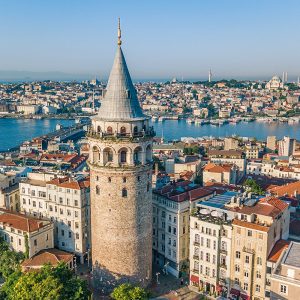
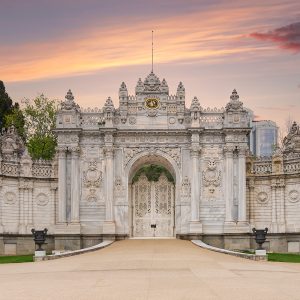
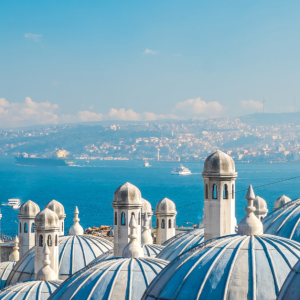
Journey begins in Istanbul, not merely as a meeting point, but as the symbolic threshold between worlds—geographical, cultural, and historical. This city, layered with Byzantine, Roman, and Ottoman legacies, offers the perfect introduction to what lies ahead: a journey not across space, but across time itself.
Upon arrival, you’ll meet with your guide, who will frame the entire expedition through a chronological lens. This is not a conventional cultural tour. Over the coming days, we will follow the arc of human civilization, from early ritual societies to structured empires.
A detailed briefing will introduce the backbone of this journey. Concepts such as the Neolithic Revolution, early urbanization, belief systems, trade networks, and imperial expansion are explained in a way that transforms the itinerary into a narrative. You begin to see how each destination fits into a much larger story.
A welcome dinner after our peninsula tour, covering Topkapi Palace, Hagia Sophia and Grand Bazaar section, is held at a carefully selected restaurant, where you first encounter with Anatolian cuisine sets the tone for the journey. Food here is not incidental—it is cultural memory. Each dish reflects geography, migration, and centuries of exchange.
Today, you are not simply beginning a tour—you are stepping into 12,000 years of human story.
⸻
Day 2 – Nicaea & Bursa | The Birth of Doctrine and Empire
Leaving Istanbul behind, you travel toward İznik (ancient Nicaea)—a city whose quiet lakeside setting conceals its immense historical significance. This was once a major Roman and Byzantine center, but more importantly, it was the stage for one of the most influential gatherings in history: the First Council of Nicaea (325 AD).
Here, theology and politics converged to define the foundations of Christianity. As you walk through the remains of the Roman theater, examine ancient city walls, and visit early churches and later mosques, you’ll obtain how belief systems shaped empires, and how cities adapted to shifting cultural identities.
Today we’ll bring depth beyond dates: discussing the transition from pagan Rome to Christian Byzantium, and later to Islamic Ottoman influence. This is not just architecture—it is ideological evolution carved in stone.
Lunch introduces the region’s agricultural richness, before continuing to Bursa, the first capital of the Ottoman Empire. Bursa represents another transformation: the rise of a new political and cultural power that would dominate the region for centuries.
Today, you have crossed centuries in a single day—setting the tone for a journey defined by continuity, transformation, and layered identity.
⸻
Day 3 – Aktopraklık & Tavşanlı | The First Settlements
Today marks a shift—away from imperial cities and into the deep past of human civilization.
At Aktopraklık Höyük, you step into the Neolithic and Chalcolithic worlds, where the first settled communities began to reshape human existence. Here, architecture, agriculture, and social organization reveal the earliest stages of village life.
This is where humanity transitions from survival to structure. You’ll see how these early communities organized space, managed resources, and began forming symbolic systems—laying the groundwork for everything that follows.
We continue our tour to Tavşanlı Höyük, where the Bronze Age introduces increasing complexity—hierarchies, trade networks, and technological advancement. The shift from egalitarian villages to stratified societies becomes visible.
Whenever possible, visits are enriched by archaeologists or excavation representatives, offering insight rarely accessible to travelers. Today we’ll end our route in Kütahya, where the evening provides time to reflect on one of the most important transitions in human history: the move from nomadic existence to permanent settlement.
⸻
Day 4 – Aizanoi & Afyon | Rome Beyond the Coast and UNESCO Creative Cities Network
Today, the journey moves forward into the Roman world, but not the coastal cities most travelers know.
At Aizanoi, one of Anatolia’s best-preserved Roman sites. The Temple of Zeus, monumental structures, and early marketplace systems reveal a city deeply integrated into imperial networks. What makes Aizanoi unique is its intact urban fabric—allowing you to understand not just individual buildings, but how a Roman city functioned as a whole.
We’ll go through Roman economics, religion, and daily life, bringing the ancient city into context.
Later, we arrive in Afyonkarahisar, a part of the UNESCO Creative Cities Network with its rich gastronomy heritage.
⸻
Day 5 – Çatalhöyük & Konya | The Origins of Society
Today is one of the defining moments of the journey.
At Çatalhöyük, we’ll stand within one of the world’s earliest proto-urban settlements, dating back over 9,000 years. This is not just an archaeological site—it is a turning point in human history.
Here, houses were entered through rooftops, walls were covered in symbolic art, and social structures began to take shape.
In the evening, the Whirling Dervishes ceremony in Konya introduces another dimension—spiritual philosophy rooted in centuries of Anatolian thought.
⸻
Day 6 – Sultanhanı to Cappadocia | Trade Routes and Hidden Worlds
Today, the journey moves from early settlements into the age of long-distance trade and mobility. Departing Konya, we follow ancient routes once used by merchants, pilgrims, and armies—corridors that connected Anatolia to Persia and beyond.
Our first stop is the impressive Sultanhanı Caravanserai, a 13th-century Seljuk structure that once served as a secure stop along the Silk Road. Walking through its monumental gate into the vast courtyard, you can almost imagine caravans arriving at dusk, goods being traded, and stories exchanged under protection of thick stone walls. This is not simply architecture—it is an early form of global connectivity.
As we continue, the landscape shifts dramatically. Volcanic formations rise across the horizon, signaling our arrival in Cappadocia. Here, nature and human adaptation intertwine.
At Kaymaklı Underground City, we descend into a multi-level subterranean world. Entire communities once lived here, with storage rooms, ventilation systems, and defensive passages designed for survival.
By late afternoon, we arrive in Cappadocia. Dinner reflects the region’s simple yet deeply rooted culinary traditions, closing a day shaped by movement, exchange, and resilience.
⸻
Day 7 – Cappadocia | Landscape, Faith, and Imagination
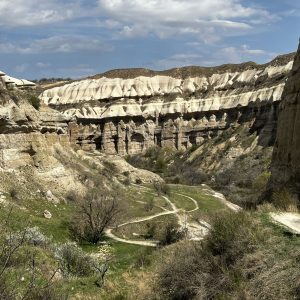
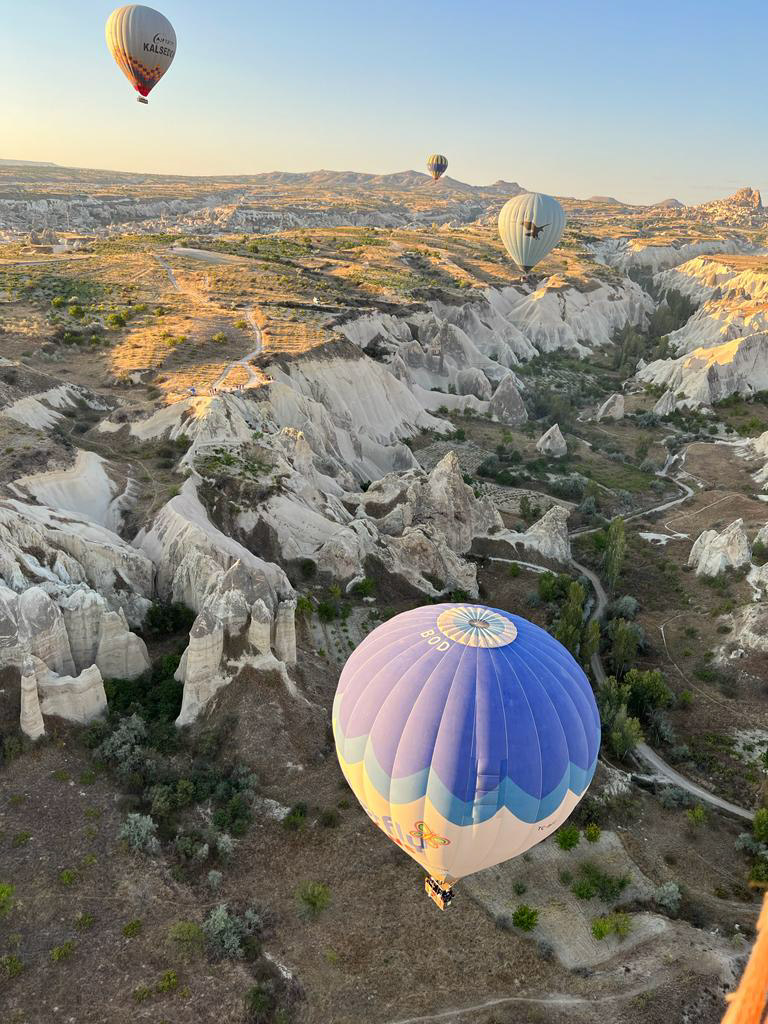
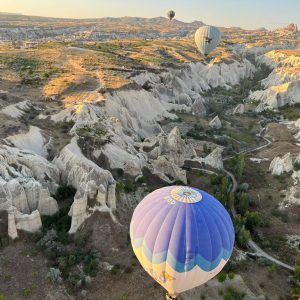
For those who wish, the day begins at sunrise with an optional hot air balloon flight, offering a breathtaking view over Cappadocia’s unique terrain—valleys, rock formations, and fairy chimneys sculpted over millennia.
After breakfast, we explore the Göreme Open Air Museum, where rock-cut churches preserve vivid Byzantine frescoes. These spaces reveal not only artistic expression, but also the spiritual life of monastic communities who sought isolation and devotion within this dramatic landscape.
Following lunch, we experience Cappadocia on foot. An easy walk through valleys, beginning to understand the relationship between geology and human ingenuity. Soft volcanic rock allowed entire living spaces to be carved into the land, while natural formations offered both protection and perspective. This is not a demanding hike, but an interpretive walk—a chance to read the landscape.
In the evening, dinner features regional specialties, often slow-cooked and deeply flavorful. Today reveals Cappadocia as a place where nature and human imagination exist in perfect dialogue.
⸻
Day 8 – From Monastery to Roman City | Continuity of Belief and Engineering
Leaving Cappadocia, this is a day that connects spiritual life with Roman infrastructure.
Our first stop is Gümüşler Monastery, a lesser-known yet remarkably well-preserved rock-cut complex. Inside, frescoes depict biblical scenes with a striking intimacy, offering insight into early Christian life away from major urban centers.
Continuing to Tyana Ancient City, the focus shifts to Roman urban planning. The remains of aqueducts and water systems highlight the importance of engineering in sustaining city life. Water was not only a necessity—it was a symbol of power and control.
Walking along these structures, we’ll see the broader Roman network, explaining how infrastructure enabled growth, trade, and stability.
By late afternoon, we descend into the fertile plains of Cilicia and arrive in Adana. This geographical shift marks a transition from highland Anatolia to a region deeply connected to agriculture and Mediterranean culture.
Dinner introduces the bold, rich flavors of southeastern cuisine—bringing together history, landscape, and taste in one experience.
⸻
Day 9 – Anazarbos & Karatepe | Power, Borders, and Kingdoms
Today focuses on the political landscapes of ancient Anatolia, where power was defined by geography and control.
At Anazarbos, a dramatic site built around a towering rock formation, we explore the remains of a once-strategic city. Monumental gates, colonnaded streets, and defensive structures reveal its importance as a regional stronghold. We’ll reconstruct the city not just as ruins, but as a living center of administration and control.
We continue to Karatepe-Aslantaş, a Late Hittite site famous for its bilingual inscriptions and detailed stone reliefs. These carvings depict rulers, rituals, and mythological narratives—offering a rare opportunity to “read” history directly from the source.
This site marks a transition between civilizations, where language and symbolism evolve alongside political structures.
In the evening, we’ll arrive in Gaziantep, a city celebrated for both its deep history and exceptional cuisine.
⸻
Day 10 – Zeugma & Halfeti | Art, Water, and Memory
The day begins at the Zeugma Mosaic Museum, home to some of the finest Roman mosaics ever discovered. These intricate works reflect wealth, mythology, and artistic sophistication, offering insight into Roman domestic life. We’ll explain the stories behind the mosaics, revealing how art functioned both aesthetically and symbolically.
We then visit the ancient city of Zeugma, once a vital crossing point over the Euphrates. Its strategic location made it prosperous, but also vulnerable to shifting powers.
In the afternoon, we continue to Halfeti for a boat trip along the river. Here, partially submerged villages create a haunting landscape, where modern history overlays ancient geography.
This contrast—between past and present, preservation and loss—adds a powerful emotional dimension to the journey.
⸻
Day 11 – Göbeklitepe | The Beginning of Civilization
Today is the intellectual and emotional highlight of the journey.
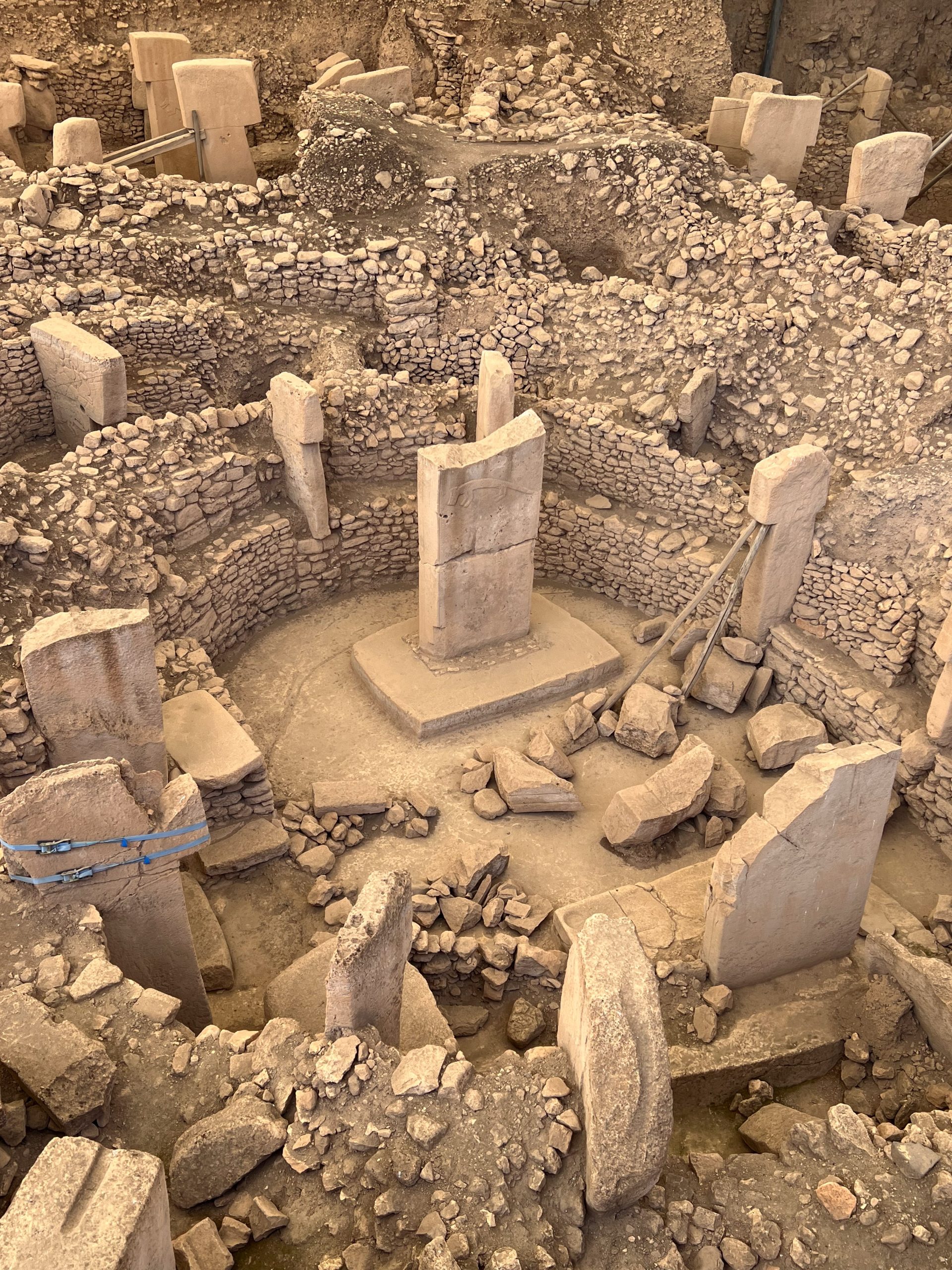
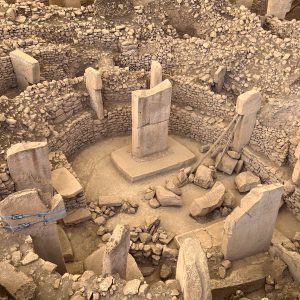
At Göbeklitepe, you encounter the world’s oldest known temple complex, dating back over 11,000 years. Massive stone pillars arranged in circular formations challenge long-held assumptions about early human societies.
Here, ritual appears before agriculture—suggesting that belief systems may have driven the formation of communities. We’ll explain the significance of these discoveries, placing them within the broader narrative of human development.
We’ll now continue to Sayburç and the Urfa Archaeological Museum, deepening our understanding of this early period.
In the evening, a Traditional Urfa Night brings the day full circle—through music, food, and living culture.
⸻
Day 12 – Karahantepe & Harran | Expanding the Neolithic World
Today expands the story introduced at Göbeklitepe.
At Karahantepe, ongoing excavations reveal that early ritual architecture was not isolated, but part of a wider cultural network. This reinforces the idea of a complex and interconnected Neolithic world.
Continuing to Harran, we encounter iconic beehive houses and a city known for its role in early Islamic scholarship. The atmosphere here reflects centuries of intellectual and cultural exchange.
By the evening, we arrive in Mardin, where stone architecture and layered history create a truly unique setting.
⸻
Day 13 – Mardin | A Living Cultural Landscape
Mardin is experienced through its streets. Walking through its historic center, you encounter a rare coexistence of languages, religions, and traditions. The architecture itself tells the story—stone houses cascading down the hillside, facing the Mesopotamian plains.
Visits include Zinciriye Madrasa, Kırklar Church, and Deyrulzafaran Monastery, each representing different layers of belief and cultural identity.
This is not a city frozen in time—it is a living continuation of Anatolia’s diverse heritage.
⸻
Day 14 – Diyarbakır & Çayönü | Foundations of Society
In Diyarbakır, we explore one of the most impressive city wall systems in the world, along with the historic mosque, Ulucami. A city built by basaltic black rocks.
The journey then continues to Çayönü, one of the earliest known agricultural settlements. Here, we see the beginnings of domestication and structured community life.
This site provides a crucial link in understanding how humans transitioned from hunter-gatherers to settled societies.
⸻
Day 15 – Arslantepe & Nemrut | Power and Legacy
At Arslantepe, we explore evidence of early state formation—administration, hierarchy, and control emerging in the archaeological record.
The journey culminates at Mount Nemrut, where colossal statues stand as a testament to the Kingdom of Commagene.
As the day ends, Mt. Nemrut transforms into a powerful visual and symbolic moment—where East meets West, and history meets myth.
⸻
Day 16 – Return to Istanbul | End of a Huge Cultural Loop
Time to return to Istanbul, completing a journey that has moved across both geography and time. In the evening, a farewell dinner offers a final moment to reflect on the experience—one that has connected the earliest human beliefs to the rise of empires.
A journey completed, but a perspective forever changed.
Participation Limitations: To ensure a comfortable and efficient experience, the number of participants is limited. Please consider this when planning your trip.
Pre-Booking Options: Pre-booking is available for participants arriving before or after the program dates to help with accommodation and logistics.
Arrival and Departure Information: We recommend sharing your arrival and departure details (dates and times) with our team in advance. This information is necessary to arrange transfers to the city center or airport.
Optional Transfers: For participants who wish to stop the program at a certain point during the day, optional transfers can be arranged at a suitable location. Please note that this incurs an additional cost to be covered by the participant.
Clothing and Equipment: A detailed list of mandatory and optional clothing and equipment will be provided separately before the program.
Health Conditions: Participants with allergies or chronic conditions are required to inform our team during registration to ensure proper precautions are taken. This activity is not recommended for individuals with conditions such as high blood pressure, asthma, rheumatism, or epilepsy, as it may be difficult to manage emergencies in nature. Please consult with our team in advance if you have concerns.
Route and Weather Conditions: Mandatory route changes may occur due to weather conditions, such as heavy rain, strong winds, or storms. Final decisions will be made by the guide, and participants are expected to comply with these changes, including modifications to boat tours.
Cancellation and Refund Policy: Due to the limited availability of accommodations in local and remote areas. Many of the lodgings we work with are small, family-run businesses with only a few rooms, making it difficult to cancel or rebook. To secure your spot, a deposit is required at the time of booking. This deposit is non-refundable, except in cases of force majeure. However, if the program is cancelled by us, the full pre-payment will be refunded.
All programs are conducted by TUREB-licensed guides and arranged by TÜRSAB-certified agency Globe Outdoors Travel (TÜRSAB Document No. A-17542)