


Western Anatolia Archaeology & Walking Journey


- Description
- Reviews (0)
- Form
Description
Seven days through the archaeological landscapes of Western Anatolia — combining ancient cities, walking, local food and the countryside that once connected them.
Western Turkey contains some of the most important archaeological landscapes in the Mediterranean. Ephesus may be the best-known ancient city in the region, but it is only one part of a much larger story.
This private seven-day journey begins around Ephesus and ancient Ionia before continuing inland towards Aphrodisias and Hierapolis. Along the way, we combine archaeological visits with selected walks, locally appropriate accommodation and regional food.
Our aim is not to visit the maximum possible number of ruins in seven days. We travel more slowly, allowing time to understand how ancient cities, sanctuaries, roads, mountains, agricultural landscapes and modern settlements relate to one another.
Explore Western Anatolia Through Archaeology and Walking
Ancient cities did not exist as isolated collections of monuments.
Roads connected them with ports, sanctuaries, villages and neighbouring communities. Mountains influenced movement. Rivers and fertile plains supported settlements. Harbours connected inland Anatolia with the wider Mediterranean world.
Walking helps us see these relationships.
Some days of this journey concentrate on major archaeological sites. Other days combine archaeology with countryside walks. The balance can be adapted according to your interests, walking experience, season and available time.
7-Day Western Anatolia Archaeology & Walking Journey
Day 1 — Ephesus and the Landscape of Selçuk
The journey begins in the Ephesus region.
With a professional licensed guide, we explore Ephesus not simply as a collection of famous monuments but as a functioning ancient city. Streets, public buildings, religious spaces, houses and infrastructure help us understand how people lived within one of the major urban centres of the ancient Mediterranean.
According to the final programme, the day can also include a walk above the ancient city, giving us a wider perspective over Ephesus and the surrounding landscape.
We finish the day in the Selçuk region.
Day 2 — Şirince, Çamlık and the Wider Ephesus Landscape
Today we leave the main archaeological site and explore the countryside around Ephesus on foot.
Our existing programme uses the landscape between Şirince and Çamlık, combining rural walking with the cultural geography surrounding Selçuk.
The archaeological story continues later in the day with selected sites and museums around Selçuk, depending on the final itinerary and opening conditions.
This combination of walking and archaeology helps place Ephesus within a much broader landscape.
Day 3 — Priene, Miletus and Didyma
Today is devoted to ancient Ionia.
Priene, Miletus and Didyma are geographically close but tell very different stories.
Priene provides an exceptional opportunity to discuss ancient urban planning and the relationship between a city and its surrounding landscape. Miletus became one of the major cities of the Ionian world, while Didyma developed around the sanctuary and oracle of Apollo.
Visiting the three together allows us to understand why the history of ancient Ionia extends far beyond Ephesus.
Day 4 — Walking to the Ephesus Highlands & Magnesia
Walking returns to the centre of the programme today.
Our existing route uses the countryside between Çamlık and the high ground around the House of the Virgin Mary, allowing us to explore another side of the Ephesus landscape away from the main archaeological entrance.
According to the final programme, the day can continue to Magnesia, adding another ancient city to the journey without turning the day into a rapid sequence of archaeological stops.
Day 5 — From Ancient Ionia Towards Aphrodisias
Today we leave the Aegean coast and travel into inland Western Anatolia.
The transition is important. The geography changes, and so does the archaeological story.
We continue towards Aphrodisias, using the journey to discuss how inland settlements, agricultural landscapes and routes connected the interior of Anatolia with the Aegean world.
The exact combination of walking, cultural stops and the archaeological visit is confirmed in the final itinerary according to travel time, season and your interests.
Day 6 — Aphrodisias, Hierapolis and the Inland Landscape
Aphrodisias offers a very different archaeological experience from the Ionian cities visited earlier in the journey.
We take time to explore the city and understand its architecture, sculpture and wider landscape before continuing according to the confirmed programme towards Hierapolis and Pamukkale.
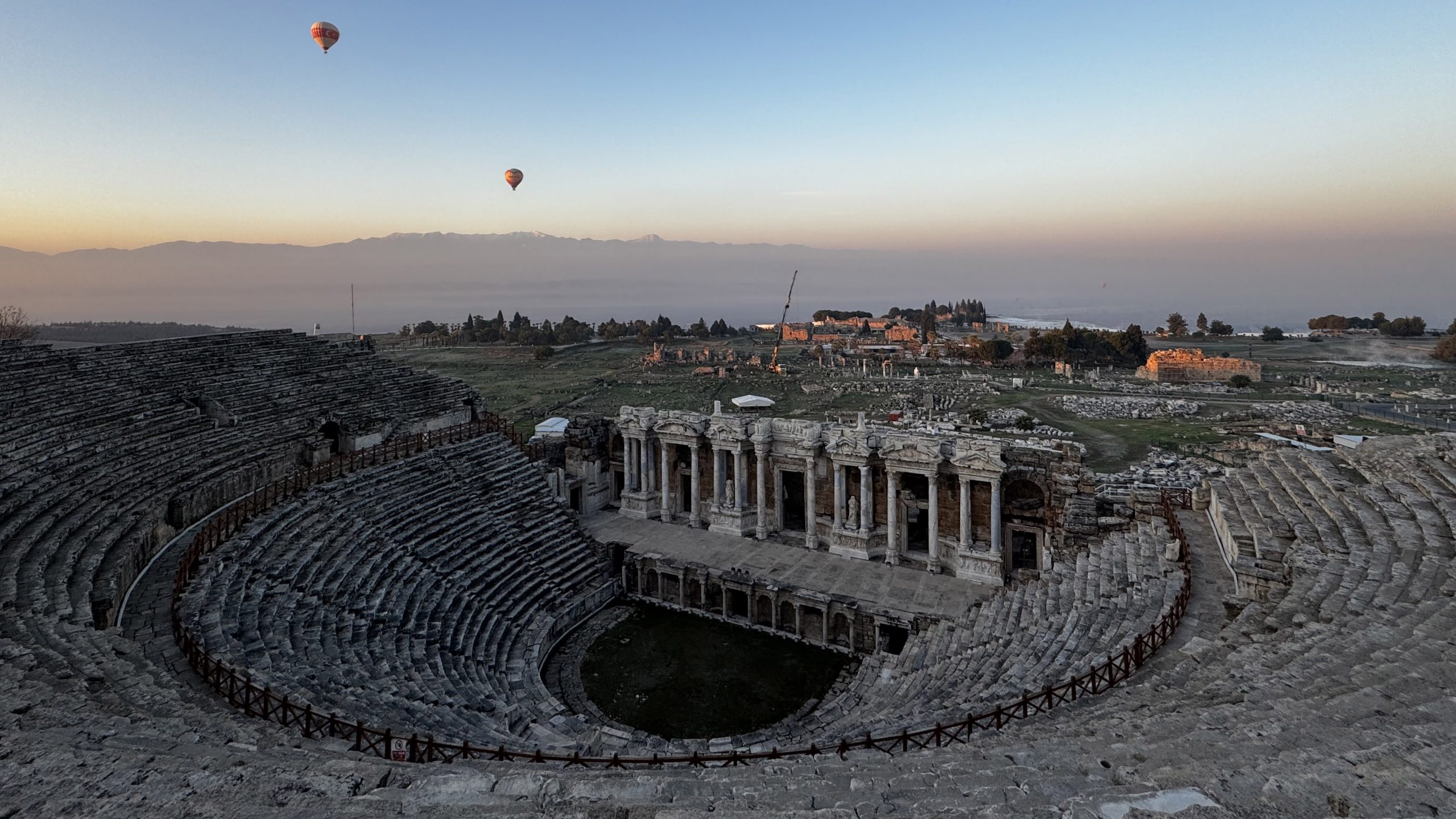
Hierapolis introduces another relationship between landscape and settlement, this time shaped strongly by the natural environment around the thermal waters.
Rather than treating Aphrodisias and Hierapolis as two more names on a sightseeing list, we use the day to compare how ancient communities developed within different landscapes of Western Anatolia.
Day 7 — Final Exploration & Departure
The final day is shaped around your departure arrangements and the confirmed itinerary.
Depending on available time, we can include further cultural exploration or a shorter walk before the journey ends.
If you have more time, the programme can also become part of a longer archaeological journey through Western Turkey.
Why This Is More Than an Ancient Cities Tour
A theatre becomes more meaningful when we understand its position within the city. A sanctuary becomes more interesting when we consider why people travelled there. An ancient road tells a different story when we understand the landscape through which it passed.
For this reason, we deliberately combine archaeological visits with walking.
The aim is not to claim that every modern path follows an ancient road. Walking simply gives us time to observe the geography that shaped the communities we are studying.
Local Food, Landscapes and Everyday Life
Western Anatolia is not only an archaeological landscape.
Modern villages, agricultural traditions, local restaurants and regional food remain part of the journey. Where the itinerary allows, we favour locally appropriate accommodation and meals that reflect the places through which we travel.
These are not staged encounters added to the itinerary. They are part of travelling slowly through the region.
Private and Tailor-Made
The seven-day programme is a framework rather than a fixed departure itinerary.
We can adjust the balance between archaeology and walking according to your interests, available time and walking experience. The final proposal confirms the accommodation, guiding, transfers, meals, walking routes and included services.
If you have only a few days, you can also explore our shorter Ephesus and Ancient Ionia programme.
For travellers with more time, this journey can become part of a wider exploration of the archaeology and cultural landscapes of Anatolia.
Who Is This Journey For?
This programme is particularly suitable for travellers interested in archaeology, ancient history, cultural landscapes and walking.
You do not need to be an archaeologist or an experienced long-distance hiker. What matters is curiosity and an interest in understanding the places through which we travel.
Frequently Asked Questions
Is this a fixed seven-day tour?
No. Seven days is a useful framework. We can adapt the programme according to your dates, interests and walking experience.
How much walking is included?
Walking is an important part of the journey, but this is not a continuous long-distance trek. Final routes and distances are selected according to the group, season, weather and itinerary.
Do I need previous knowledge of archaeology?
No. The journey works for curious travellers as well as visitors with a deeper interest in archaeology and ancient history.
Can I book only the Ephesus and Ionia section?
Yes. A shorter programme concentrating on Ephesus, Şirince, Priene, Miletus, Didyma and the surrounding landscapes can be arranged separately.
Can the programme include both Aphrodisias and Hierapolis?
Yes. They can form part of the longer Western Anatolia programme. The final itinerary confirms the archaeological sites, walking programme and overnight locations.
Is this journey guided?
We recommend professional guiding for a journey in which archaeology forms such an important part of the experience. Your final proposal confirms the guiding arrangements for each stage.
Design Your Western Anatolia Journey
Tell us your proposed travel dates, number of travellers, available time, walking experience and particular archaeological interests. We will use these details to prepare a journey around your priorities rather than asking you to fit into a standard package.
You can contact OutdoorInTurkey by completing our enquiry form, sending us a message, contacting us via WhatsApp or emailing our team. We will be happy to answer your questions and prepare a detailed proposal.
Travel services are organised by Globe Outdoors Travel, TÜRSAB Document No. A-17542.
Reviews
There are no reviews yet.